HomeTopicsScience
Topic

Science

17 essays
Trending
The Brilliant Inventor Who Made Two of History's Biggest Mistakes
Thomas Midgley Jr. from Columbus invented both leaded gasoline and Freon. There may be no other single person in history who did as much damage to human health and the planet, all with the best of intentions.
The Brilliant Inventor Who Made Two of History's Biggest Mistakes
The Case Against Civilization
9.0(1)
Pleistocene Park
Pleistocene Park
8.0(1)
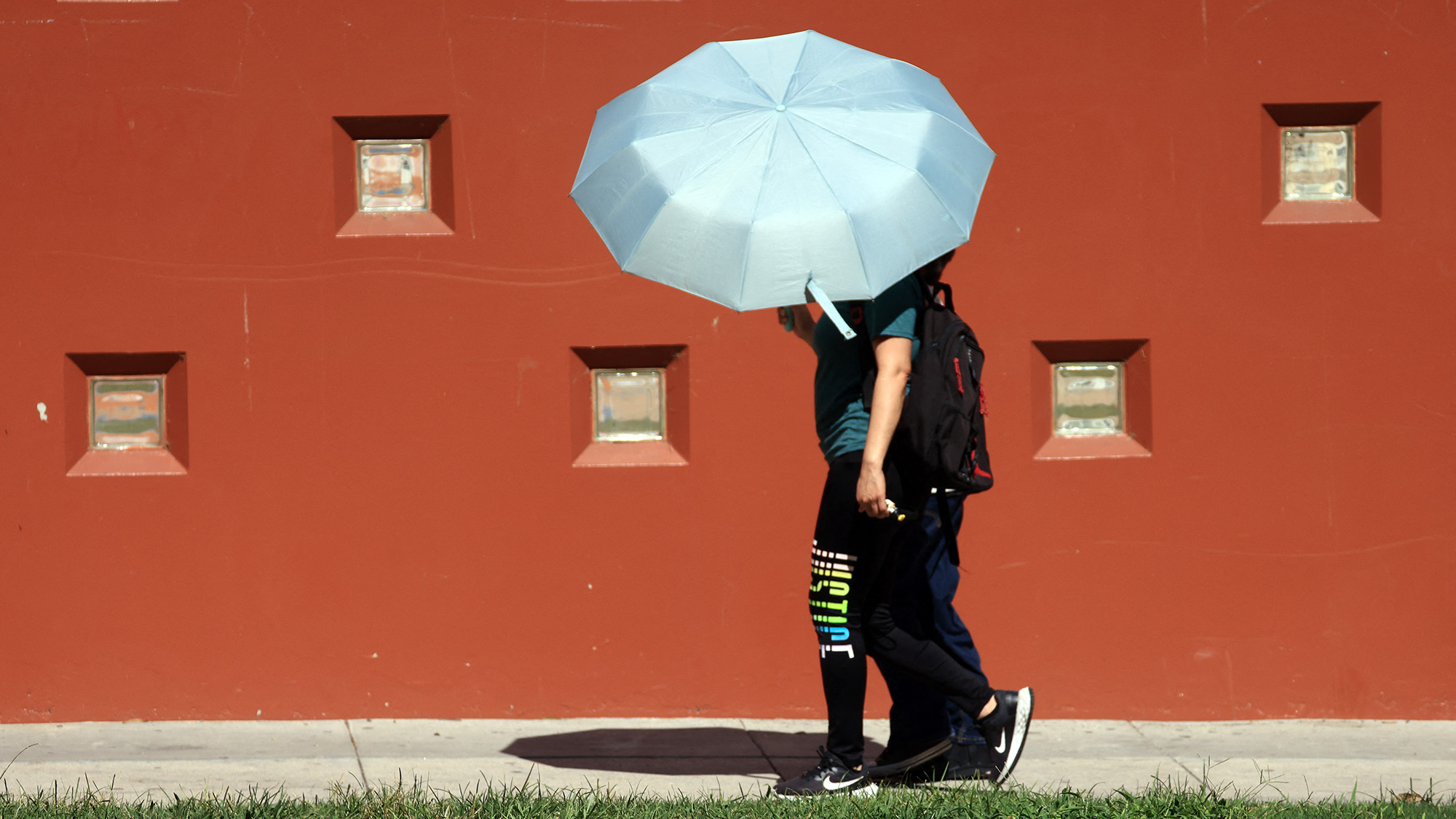
This Inexpensive Action Lowers Hospital Infections and Protects Against Flu Season
7.0(1)
All Articles & Essays
Top RatedMost ReadMost RecentOldestA–Z
The Brilliant Inventor Who Made Two of History's Biggest Mistakes
Thomas Midgley Jr. from Columbus invented both leaded gasoline and Freon. There may be no other single person in history who did as much damage to human health and the planet, all with the best of intentions.
Steven Johnson·NYT Magazine·2023
9.0(1)
The Case Against Civilization
Recent archaeological evidence suggests that the invention of agriculture was a catastrophe for human health, equality, and freedom — we should never have started farming.
John Lanchester·The New Yorker·2017
9.0(1)
Pleistocene Park
Pleistocene Park
A father and son in Siberia are attempting to restore the mammoth steppe — an ancient grassland ecosystem that once covered the Arctic and could, if revived, slow the thawing of permafrost.
Ross Andersen·The Atlantic·2017
8.0(1)
This Inexpensive Action Lowers Hospital Infections and Protects Against Flu Season
Harvard research shows that maintaining indoor humidity between 40–60% in hospitals, schools, and homes dramatically reduces the transmission of airborne pathogens and seasonal flu.
Leah Binder·Forbes·2019
7.0(1)
What We Know About Weight-Loss Drugs Is Rapidly Changing
The widespread use of drugs like Ozempic is giving scientists a clearer picture than ever of their effects.
Dani Blum·The New York Times·2026
6.0(1)
Random Numbers Quantum Encryption
Encryption systems rely on “random” numbers, but conventional computers can’t generate them perfectly. New research shows that quantum physics can.
Alexander Nazaryan·The New York Times·2026
6.0(1)
An Engineering History of the Manhattan Project
The Manhattan Project, the US program to build an atomic bomb during WWII, is one of the most famous and widely known major government projects: a survey in 1999 ranked the dropping of the atomic bomb as the top news story of the 20th century. Virtually everyone knows that the project built the bombs that were dropped on Hiroshima and Nagasaki. And most of us probably know that the bomb was built by some of the world’s best physicists, working under Robert Oppenheimer at Los Alamos in New Mexico. But the Manhattan Project was far more than just a science project: building the bombs required an enormous industrial effort of unprecedented scale and complexity. Enormous factory complexes were built using hundreds of millions of dollars worth of never-before-constructed equipment. Scores of new machines, analytical techniques, and methods of working with completely novel substances had to be invented. Materials which had never been produced at all, or only produced in tiny amounts, suddenly had to be manufactured in vast quantities.
Brian Potter·Construction Physics·2026
0.0
What Makes Us Happy?
Is there a formula—some mix of love, work, and psychological adaptation—for a good life? For 72 years, researchers at Harvard have been examining this question, following 268 men who entered college in the late 1930s through war, career, marriage and divorce, parenthood and grandparenthood, and old age.
Joshua Wolf Shenk·The Atlantic·2009
0.0
The Evolution of Eyes Began With One
Even Charles Darwin was puzzled by the evolution of the vertebrate eye. New research suggests that it traces back to a cyclopean invertebrate with a single eye atop the head.
Carl Zimmer·The New York Times·2026
0.0
The real reason humans are the dominant species
How demand for energy has been central to the development of humanity.
Justin Rowlatt·BBC·2021
0.0
On the Trail of Legends and Giants in Wales
A Welsh writer’s trip hugs the coastline of Gwynedd, a land of castles, dramatic cliffs and wide river estuaries.
Matthew Yeomans·The New York Times·2026
0.0
Consider the Lobster
A visit to the Maine Lobster Festival becomes an extended meditation on animal consciousness, ethics, and what we lose when comfort becomes our highest value.
David Foster Wallace·Harper's Magazine·2004
0.0
The Law of Acceleration
Adams proposes that historical change follows an exponential curve — and wonders, with genuine dread, where the acceleration of science and technology must ultimately lead.
Henry Adams·Books & Collections·1907
0.0
The Marginal World
The Marginal World
From The Edge of the Sea: Carson describes the tidal zone — neither fully land nor water — as a lesson in impermanence, adaptation, and the strange beauty of the threshold.
Rachel Carson·Books & Collections·1955
0.0
The Lives of a Cell
The Lives of a Cell
Thomas finds in the biological world a model of symbiosis, interdependence, and collective intelligence — and asks what it means that we, like cells, are part of something much larger than ourselves.
Lewis Thomas·Books & Collections·1971
0.0
Total Eclipse
Total Eclipse
Dillard watches a total solar eclipse from a hilltop in Washington state and discovers in two minutes of totality something that undoes her — and that she can barely bring herself to describe.
Annie Dillard·The Atlantic·1982
0.0
The Creation Myths of Cooperstown
Gould examines the myth that Abner Doubleday invented baseball in Cooperstown in 1839 — using it as a case study in why nations need origin myths, and why the truth is always messier and more interesting.
Stephen Jay Gould·Books & Collections·1989
0.0