Oates explores her childhood compulsion to enter abandoned farmhouses in upstate New York — meditating on what emptied spaces contain and what the imagination makes of lives that have left no other trace.
Bellow meditates on the photographs and images that have formed his inner life — and on memory, loss, and the strange power of the visual to outlast the people it depicts.
Updike's meditation on inhabiting a male body — the particular experiences of physicality, sexuality, and mortality that mark the male life from youth to old age.
Life with Daughters: Watching the Miss America Pageant0.0
Already have an account? Log in Join KR for even more to read. Sign up for a free account and read any five pieces a month. Sign Up and Read […]
Gould examines the myth that Abner Doubleday invented baseball in Cooperstown in 1839 — using it as a case study in why nations need origin myths, and why the truth is always messier and more interesting.
A meditation on suicide — why people choose it, what stops them, and what it reveals about the relationship between hope, pain, and the will to continue in a world that offers no guarantees.
Manchester returns in memory to the battle of Okinawa, where he was wounded as a young Marine, and asks why he cannot hate the Japanese — and what the Pacific War made of him and his generation.
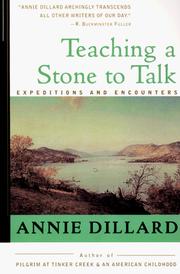
Dillard watches a total solar eclipse from a hilltop in Washington state and discovers in two minutes of totality something that undoes her — and that she can barely bring herself to describe.
A meditation on the Bronx drugstore of Ozick's childhood as the site of her education as a writer — and on the connection between the smell of ink and the desire to make something endure.
Ehrlich arrives in Wyoming to film a documentary, stays to become a rancher, and finds in the spare landscape and spare speech of the West a cure for grief and an education in necessity.
We tell ourselves stories in order to live. Didion's fractured account of the late 1960s — the Manson trial, rock bands, personal breakdown — as a portrait of a narrative that refused to cohere.
Rich's meditation on the relationship between women and lying — not as moral failing but as learned survival — and what genuine honesty between women might require and make possible.
Gass's meditation on the nature of failure — literary, personal, historical — argues that sinking is not the opposite of achievement but its necessary companion and condition.
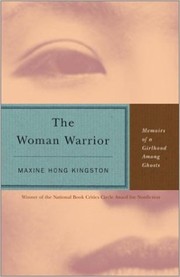
Kingston reconstructs the story of her aunt, who drowned herself in the family well after giving birth to an illegitimate child — meditating on female transgression, family silence, and the cost of forgetting.
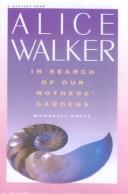
Walker's account of her pilgrimage to find the unmarked grave of Zora Neale Hurston — an act of literary resurrection that asks who gets remembered and who gets buried.
Thomas finds in the biological world a model of symbiosis, interdependence, and collective intelligence — and asks what it means that we, like cells, are part of something much larger than ourselves.
Angelou's account of growing up Black in Stamps, Arkansas — a portrait of childhood shaped by racism, silence, violence, and an eventual, hard-won sense of self.
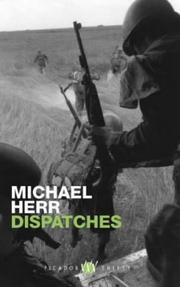
Herr's hallucinatory Vietnam dispatches — a new kind of war writing that took the interior weather of combat seriously, capturing not just what happened but what it felt like to be inside the American war machine.
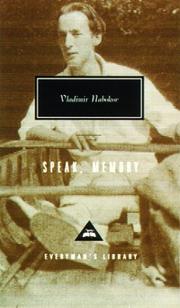
Nabokov's crystalline recreation of a Russian childhood — the precise rendering of memory's textures and colors, and the impossibility of recovering what has been perfectly loved.