ponder
Philosophy

The Death of the Moth

The Death of the Moth
0.00 ratings·0 reads logged

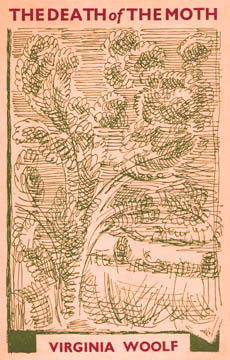
"“The Death of the Moth” is a famous 1942 posthumous essay written by the English author Virginia Woolf."

Read full essay at Virginia Woolf ↗
Added by @colin
Found In These Lists
Comments
Sign in to leave a comment.
Loading comments…
You Might Also Like
Shooting an Elephant
10.0(1)
Shooting an Elephant
George Orwell · The Orwell Foundation
On Being Ill
0.0
On Being Ill
Virginia Woolf · Books & Collections
Does Truth Matter? Science, Pseudoscience, and Civilization
0.0
Does Truth Matter? Science, Pseudoscience, and Civilization
Carl Sagan · Skeptical Inquirer
The New Commandments
0.0
The New Commandments
Christopher Hitchens · Vanity Fair
Books by Virginia Woolf
Enjoyed their writing? Take home one of their books.
★ 4.4 · 13 ratings on Open LibraryFiction, Psychological2021
Tracing the lives of a group of friends, this novel follows their development from childhood to middle age. Social events, individual achievements and disappointments form the outer structure of the book, but the focus is the inner life of the characters which is conveyed in rich poetic language.
★ 3.7 · 52 ratings on Open LibraryFiction2022
Virginia Woolf’s novel chronicles a day in the life of Clarissa Dalloway, a politician’s wife in 1920s London, as she prepares to host a party that evening. The narrative follows Clarissa’s thoughts (and sometimes those of people she meets) as she goes about her errands, and events in the day remind her of her youth and friendships from the past. As the book progresses characters from the past emerge, igniting old feelings and making Clarissa question the life she has created for herself. *Mrs. Dalloway* became the inspiration for Michael Cunningham’s 1998 novel *The Hours*.
★ 4.3 · 38 ratings on Open LibraryAuthorship2021
A Room of One's Own is an extended essay by Virginia Woolf. First published on 24 October 1929, the essay was based on a series of lectures she delivered at Newnham College and Girton College, two women's colleges at Cambridge University in October 1928. While this extended essay in fact employs a fictional narrator and narrative to explore women both as writers of and characters in fiction, the manuscript for the delivery of the series of lectures, titled "Women and Fiction", and hence the essay, are considered non-fiction. The essay is generally seen as a feminist text, and is noted in its argument for both a literal and figural space for women writers within a literary tradition dominated by patriarchy.
As a Bookshop affiliate, ponder earns from qualifying purchases.