Do lobsters feel pain? Did Franz Kafka have a funny bone? What is John Updike's deal, anyway? And what happens when adult-video starlets meet their fans in person? David Foster Wallace answers these questions and more in essays that are enthralling narrative adventures. Whether covering the three-ring circus of a vicious presidential race, plunging into the wars between dictionary writers, or confronting the World's Largest Lobster Cooker, Wallace projects a quality of thought that is uniquely his and a voice as powerful and distinct as any in American letters.
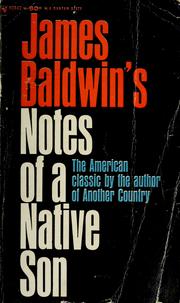
"Baldwin's searing account of his father's death, the Harlem riot, and what it means to be Black in America — one of the defining essays of the twentieth century."
Enjoyed their writing? Take home one of their books.
★ 4.4 · 12 ratings on Open LibraryAfrican Americans1964149 pages
Since its original publication in 1955, this first nonfiction collection of essays by James Baldwin remains an American classic. His impassioned essays on life in Harlem, the protest novel, movies, and African Americans abroad are as powerful today as when they were first written. “A straight-from-the-shoulder writer, writing about the troubled problems of this troubled earth with an illuminating intensity.”, Langston Hughes, The New York Times Book Review “Written with bitter clarity and uncommon grace.”, Time
★ 4.2 · 37 ratings on Open LibraryRace Relations2024
Considered an 'audacious' second novel, GIOVANNI'S ROOM is set in the 1950s Paris of American expatriates, liaisons, and violence. This now-classic story of a fated love triangle explores, with uncompromising clarity, the conflicts between desire, conventional morality and sexual identity.
★ 4.5 · 34 ratings on Open LibraryRace Relations1991106 pages
**From Amazon.com:** A national bestseller when it first appeared in 1963, *The Fire Next Time* galvanized the nation and gave passionate voice to the emerging civil rights movement. At once a powerful evocation of James Baldwin's early life in Harlem and a disturbing examination of the consequences of racial injustice, the book is an intensely personal and provocative document. It consists of two "letters," written on the occasion of the centennial of the Emancipation Proclamation, that exhort Americans, both black and white, to attack the terrible legacy of racism. Described by The New York Times Book Review as "sermon, ultimatum, confession, deposition, testament, and chronicle...all presented in searing, brilliant prose," The Fire Next Time stands as a classic of our literature.

 by colin