Hughes channels his character Simple to explain bebop: the music is the sound of a Black man who has been hit on the head too many times, and the sound he makes going down.
Perelman's battle with a foolproof set of assembly instructions descends into surreal absurdity — a perfect comedy of the modern relationship between people and their things.
Frost's brief, resonant preface articulates his famous dictum: a poem begins in delight and ends in wisdom, making its way from surprise to a clarification of life.
A comic meditation on the American male's peculiar anxiety toward machinery — and the suspicion, never quite suppressed, that all mechanisms are secretly hostile.
Wright's autobiographical account of learning to survive in the Jim Crow South — a catalog of humiliations and adaptations that constitutes a primer in what systemic racism actually feels like from the inside.
What Are Master-Pieces and Why Are There So Few of Them
Stein's paradoxical inquiry into why masterpieces exist outside of time and identity — and why memory, that most personal of faculties, is the enemy of the truly great work.
Returning to his family's old house in upstate New York, Wilson traces his Talcottville roots through generations of American history — a meditation on inheritance, loss, and regional identity.
Virginia Woolf's observation that illness is one of the great subjects literature has avoided — and her attempt, from a sickbed, to begin that conversation.
Mencken attends a Holy Roller revival meeting in the hills of Tennessee and renders the scene with his characteristic mix of contempt, humor, and grudging fascination.
An early dispatch from the Pamplona bullfights that captures Hemingway's signature aesthetic: the compression of experience into sensation, the festival as ritual, the crowd as organism.
Eliot's foundational argument that the truly original poet must possess historical sense — a simultaneous awareness of both the present and the entire past of European literature.
A speech delivered to a nearly empty hall on the anniversary of a lynching — Chapman's moral reckoning with collective guilt is among the most extraordinary documents of the American conscience.
Adams proposes that historical change follows an exponential curve — and wonders, with genuine dread, where the acceleration of science and technology must ultimately lead.
James argues that the martial virtues — discipline, solidarity, sacrifice — need not require actual war, and imagines a civilian service that could channel them toward peaceful ends.
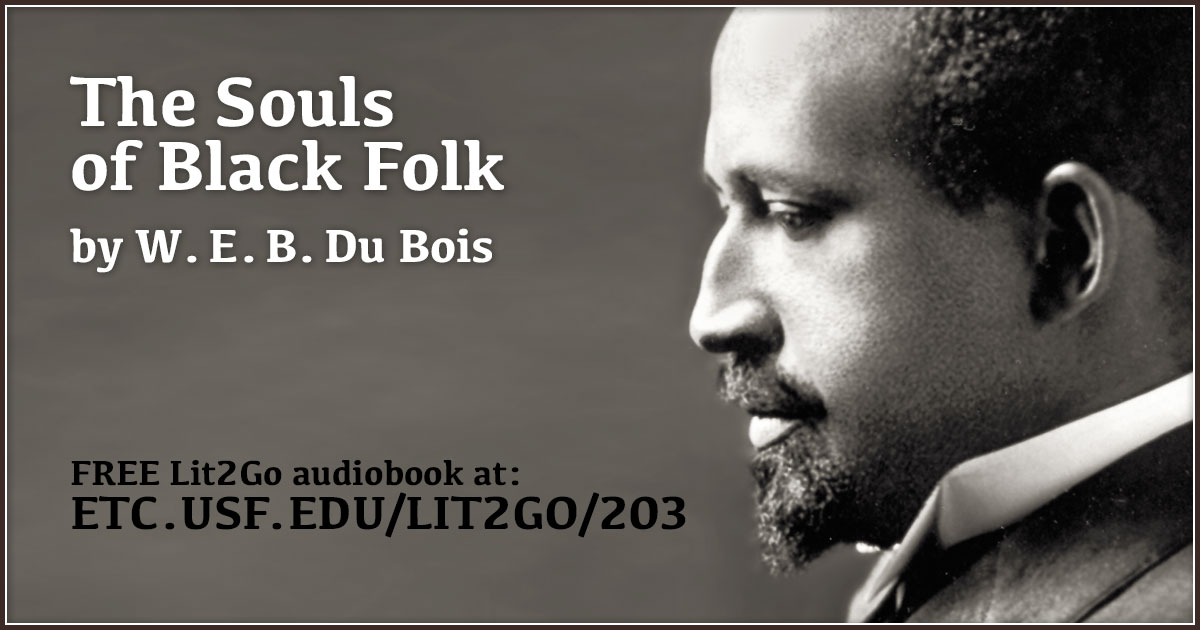
From The Souls of Black Folk — the tragic story of John Jones, a Black man whose education creates an unbridgeable distance between him and his Southern home.